What a Maltipoo is
The Maltipoo is a designer cross: a Maltese mated to a Toy Poodle. It appeared in the USA in the 1990s as an attempt to get a small dog with the Maltese temperament and the Poodle's non-shedding coat. Neither the FCI nor the RKF recognises the Maltipoo as a breed, which means no pedigree exists for such a puppy at all.
That is worth understanding before the purchase, not after. Since there are no papers, the only way to check that what you are looking at really is a Maltipoo, and not a cross with heaven knows what, is to see both parents. An honest breeder shows you the dam, the sire and their documents. If you are only shown a puppy that is 'on its way' while the parents are 'not around' — that is not a Maltipoo, that is a lottery.
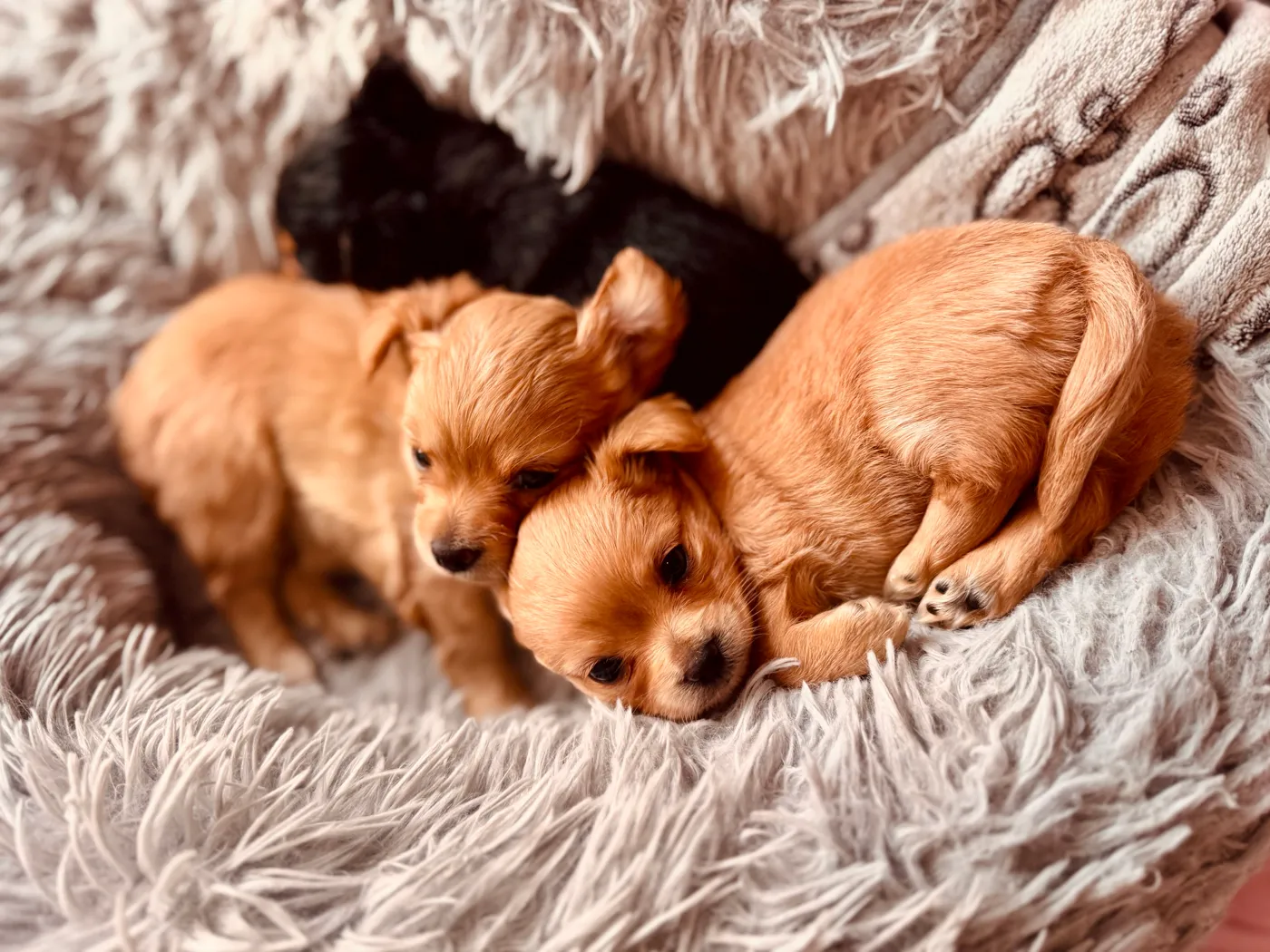
A Maltipoo's looks are unpredictable even within one litter: puppies range from straight-coated to curly, from white to red and grey. Adult size varies too — anywhere from 2 to 6 kg. A breeder who promises the exact adult weight and colour either does not know the breed or is selling you something else.

Temperament
The Maltipoo is a companion pure and simple, with no working drive. It is calmer than a Poodle and less demanding about exercise: two short walks a day are enough. In return it is deeply dependent on people — this dog is simply not built to be left alone for eight hours.
The temperament is usually soft and sociable; there is no aggression in the type. Maltipoos get on well with school-age children, but for under-fives such a dog is a poor choice: 2–3 kg of weight and thin bones mean one bad fall from someone's arms ends in a fracture.
Barking is the weak point. From the Maltese side a Maltipoo often inherits the habit of barking at every rustle behind the door. It is fixable through early exposure to stairwell noise, but you have to start in the first weeks, not when the dog is a year old.
Care
A Maltipoo's coat does not shed but grows constantly, and in terms of cost the upkeep is closer to a Poodle than to a Maltese. Clipping every 6–8 weeks, 500–800 MDL in Chisinau. Between clips, brushing every other day, otherwise mats form behind the ears and on the paws.
Eyes need daily attention: light-coloured dogs develop reddish tear stains. Wipe them with a damp pad and keep hair out of the eye — that is the most common cause of watering in this type.
Teeth are non-negotiable. In small dogs with a shortened jaw the milk teeth often fail to fall out on their own and the adult teeth come through in a second row. By the age of one the puppy must be seen by a vet: retained milk teeth are extracted, otherwise the bite and gums are ruined for good.
Living in an apartment
For a flat the Maltipoo is ideal: 2–6 kg, no shedding, no smell, happy with two short walks. Many owners also train the dog to a pad — at this size that is normal practice, especially in winter.
The main limitation is not physical but practical: the dog cannot be left alone for long. If you work away from home all day and live by yourself, this breed will be miserable. If someone is home, or you take the dog with you, there is hardly a better flat companion.
Maltipoo price in Moldova
A Maltipoo puppy in Moldova costs between 7,000 and 16,000 MDL, with a median asking price around 10,000. That is more than most pedigree dogs with papers, and the buyer should understand what they are paying for: a Maltipoo will never have a pedigree — the price rests on fashion and looks.
So look not at paperwork but at the parents and the veterinary side: a vet passport, two age-appropriate vaccinations, parasite treatment, a check-up before the sale. And do not take a puppy under three months — in 2 kg dogs early separation from the mother ends in hypoglycaemia and behavioural problems.