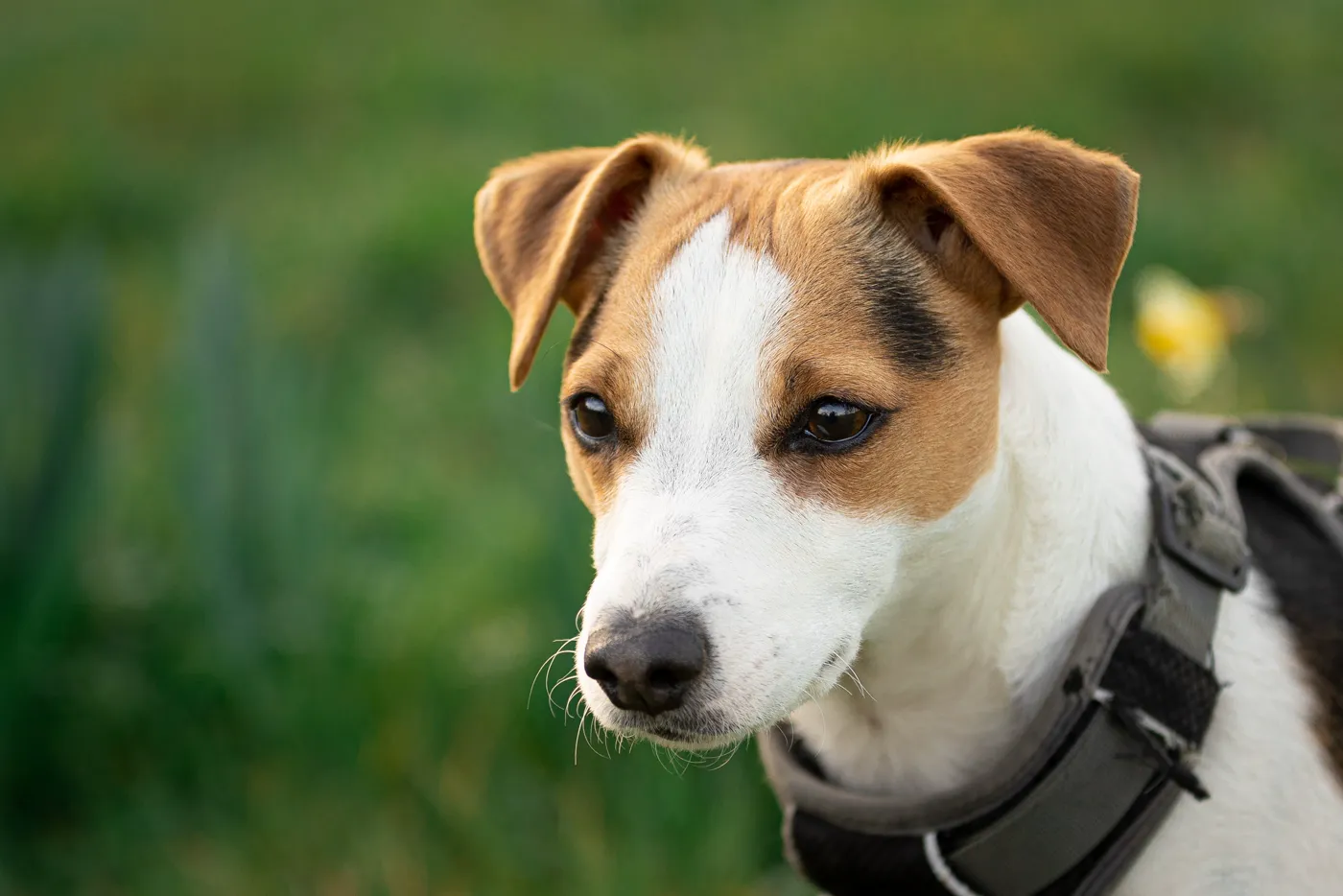
Jack Russell Terrier breed overview
The breed was created by the English parson John Russell in the first half of the 19th century, for fox hunting. The dog had to run behind horses all day, then go into the earth and drive the quarry out. Every requirement of the breed came from that job: a compact body, fearlessness and virtually inexhaustible stamina.
In size it is 25–30 cm at the withers and 5–8 kg. The coat comes in three types — smooth, rough and broken; coat type has no bearing on temperament. The base colour is white with tan or black markings: the white body let the hunter tell the dog from the fox.
In Moldova the Jack Russell costs noticeably less than other popular breeds — a median of about 2,000 MDL. The reason is not the quality of the dogs but the fact that many people buy the breed 'because of the film', cannot cope with its energy and resell it a year later. For a buyer that is an opportunity: you can get a good dog cheaply if you understand what you are taking on.
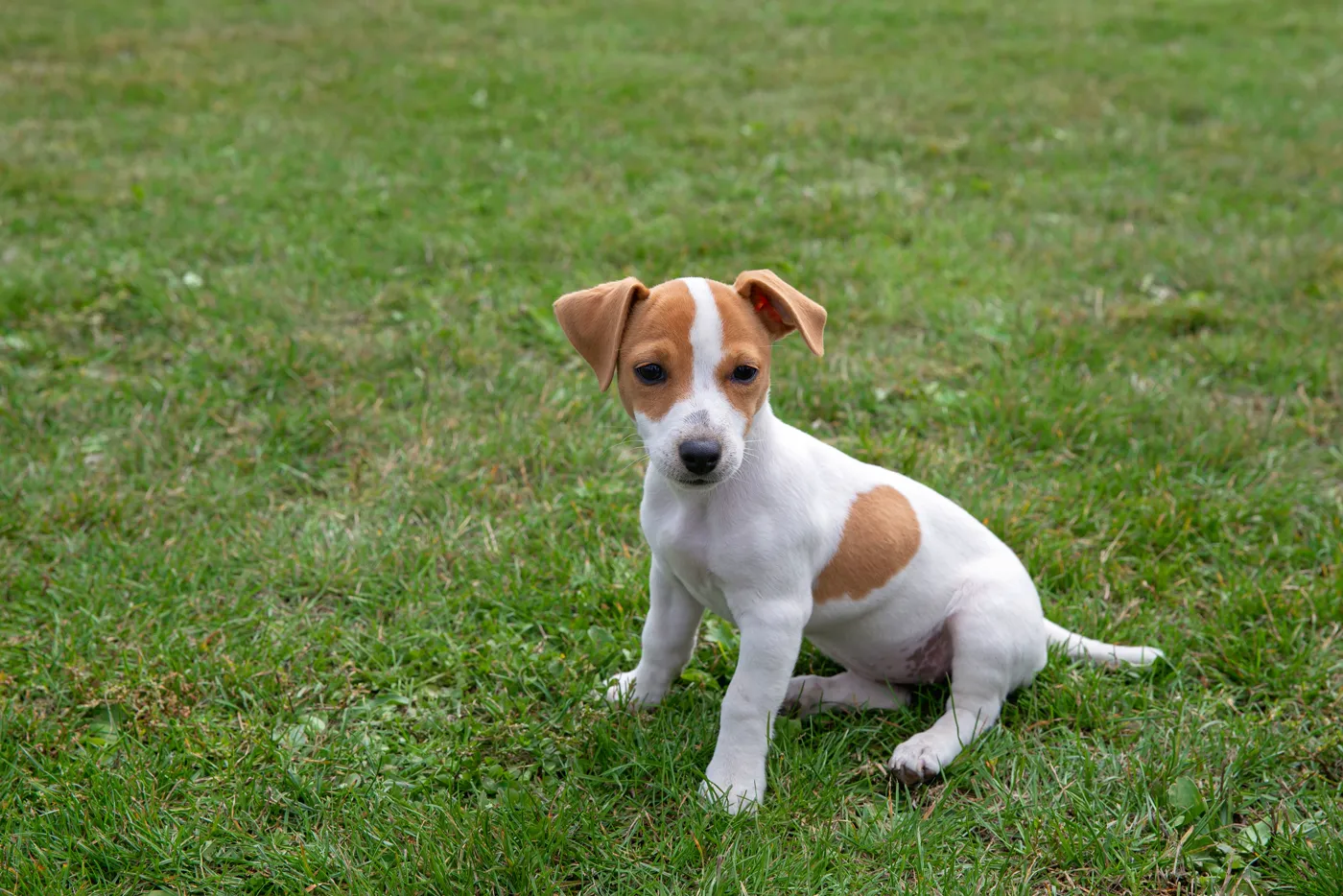
Temperament and exercise
The Jack Russell is the most energetic of the small breeds, and that is the key thing to grasp before buying. It needs two hours of active walking a day, not a fifteen-minute trip outside. A dog that is not exercised digs up the sofa, chews the skirting boards and barks non-stop — not out of spite, but because the energy has to go somewhere.
The hunting instinct is fully intact. A Jack Russell chases cats, pigeons and anything that runs, and off-lead it can follow prey a kilometre away. Recall must be trained from puppyhood, and even then you should not count on it being a hundred per cent reliable in open country.
At the same time the character is cheerful and very sociable: with school-age children a Jack Russell does better than most small breeds — it is not afraid of rough-and-tumble and is physically sturdy. It learns easily and loves search and retrieve games, which is exactly how it should be kept busy.
Care
In coat care this is one of the simplest breeds. Smooth-coated dogs are brushed once a week with a rubber mitt; rough-coated ones are hand-stripped twice a year — dead hair plucked out, 300–500 MDL at a grooming salon. There is no clipping in the breed at all.
The Jack Russell sheds noticeably and all year round: the short, stiff hair works its way into fabric and is harder to remove than long hair. Regular brushing greatly reduces the problem but does not eliminate it — worth bearing in mind if you have light-coloured furniture.
The breed's health is robust and working-dog sound. The main risks are luxating patella, deafness in all-white dogs, and injuries: a Jack Russell jumps from heights and climbs where it should not, and most owners' vet visits are for exactly that.
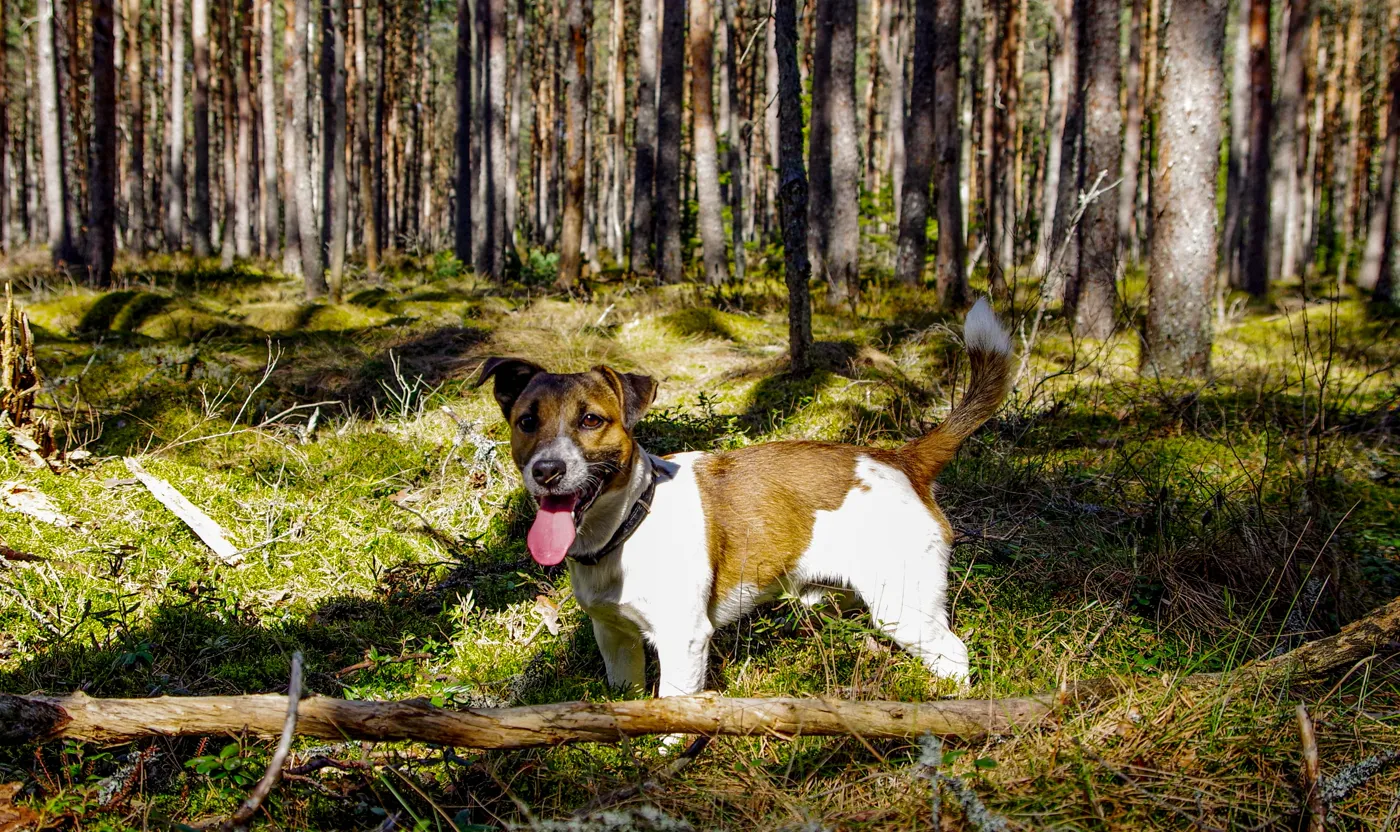
Flat or house
A Jack Russell can live in a flat, but only with an active owner. Its small size is deceptive: in exercise needs this dog is closer to a shepherd than to a Yorkie. If your day is work from nine to six and a short walk in the evening, the breed is not for you — better to admit that before buying than to resell the dog a year later.
A house suits better, with one caveat: the fence must be dug in around the whole perimeter. An earth terrier digs by instinct and will tunnel under wire in a single evening. Free running without a fence is impossible — the dog will follow a scent and be gone.
Jack Russell price in Moldova
A Jack Russell Terrier puppy in Moldova costs between 2,000 and 6,000 MDL, with a median around 2,000. That is the lowest price of any popular breed, and the reason is not the quality of the dogs but the high rate of resale: people buy the breed on impulse and then cannot handle its temperament.
For a buyer who knows what they are getting into, that is a bargain: 3,000–5,000 MDL here buys a puppy with papers, while the same money buys nothing at all in Poodles or Maltipoos. Do have the hearing checked on all-white puppies and ask to see the parents moving.