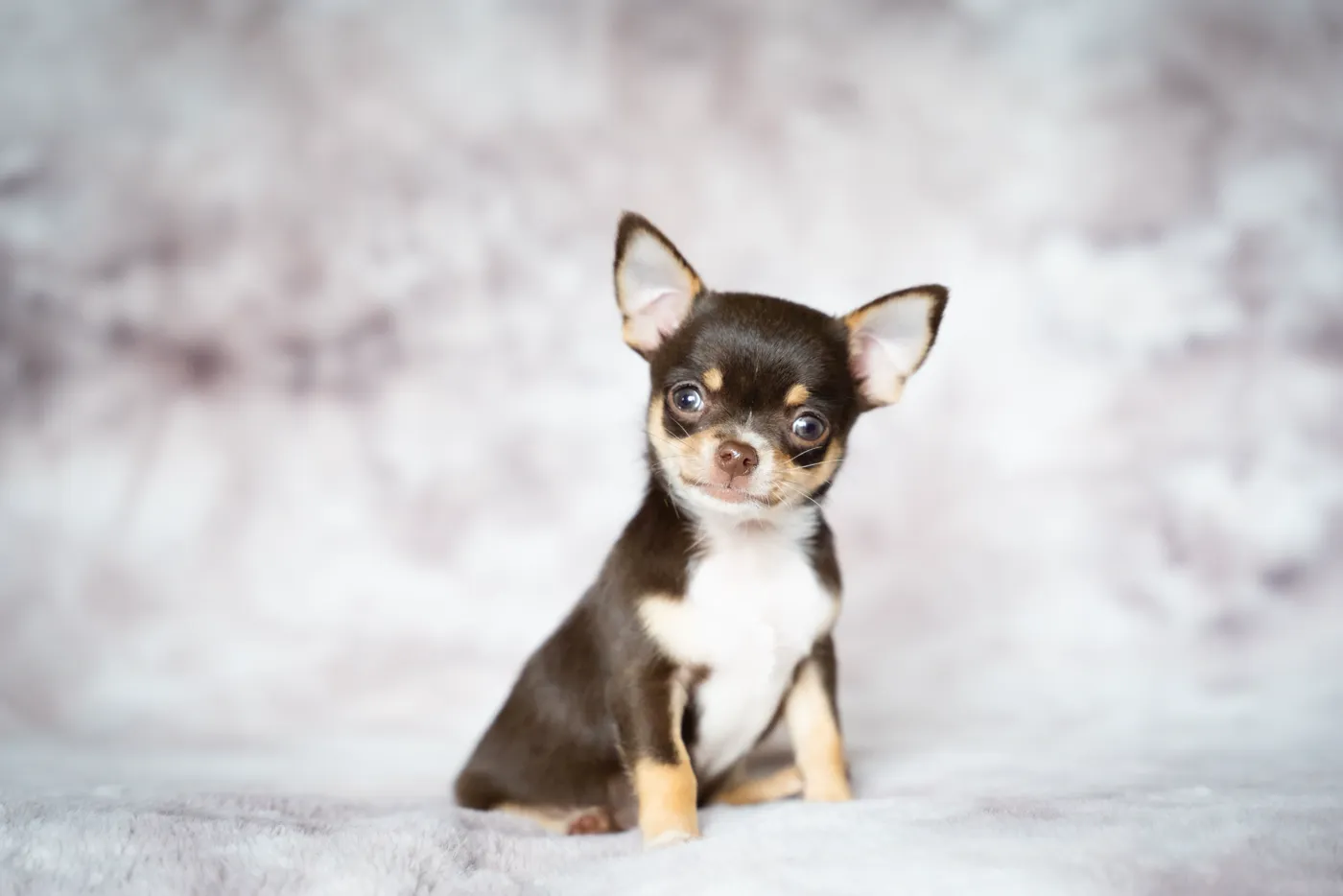
Chihuahua breed overview
The Chihuahua comes from Mexico, is named after the state of Chihuahua and is thought to descend from the techichi dogs kept by the Aztecs. It is the only breed whose standard limits not height but weight alone: from 1.5 to 3 kg. Dogs over 3 kg are not admitted to breeding, though as household companions they do perfectly well at 4 kg.
There are two varieties: smooth-coat and long-coat. They are one breed, can be born in the same litter, and their temperament and health are identical. The long-coated one is brushed slightly more often — that is the whole difference in care.
A distinctive feature of the breed is the molera, an unclosed fontanelle on the skull. In some Chihuahuas it stays for life and is permitted by the standard. It is not a disease, but it does mean the dog's head must be protected: a knock or a fall is more dangerous for it than for other breeds.
Temperament
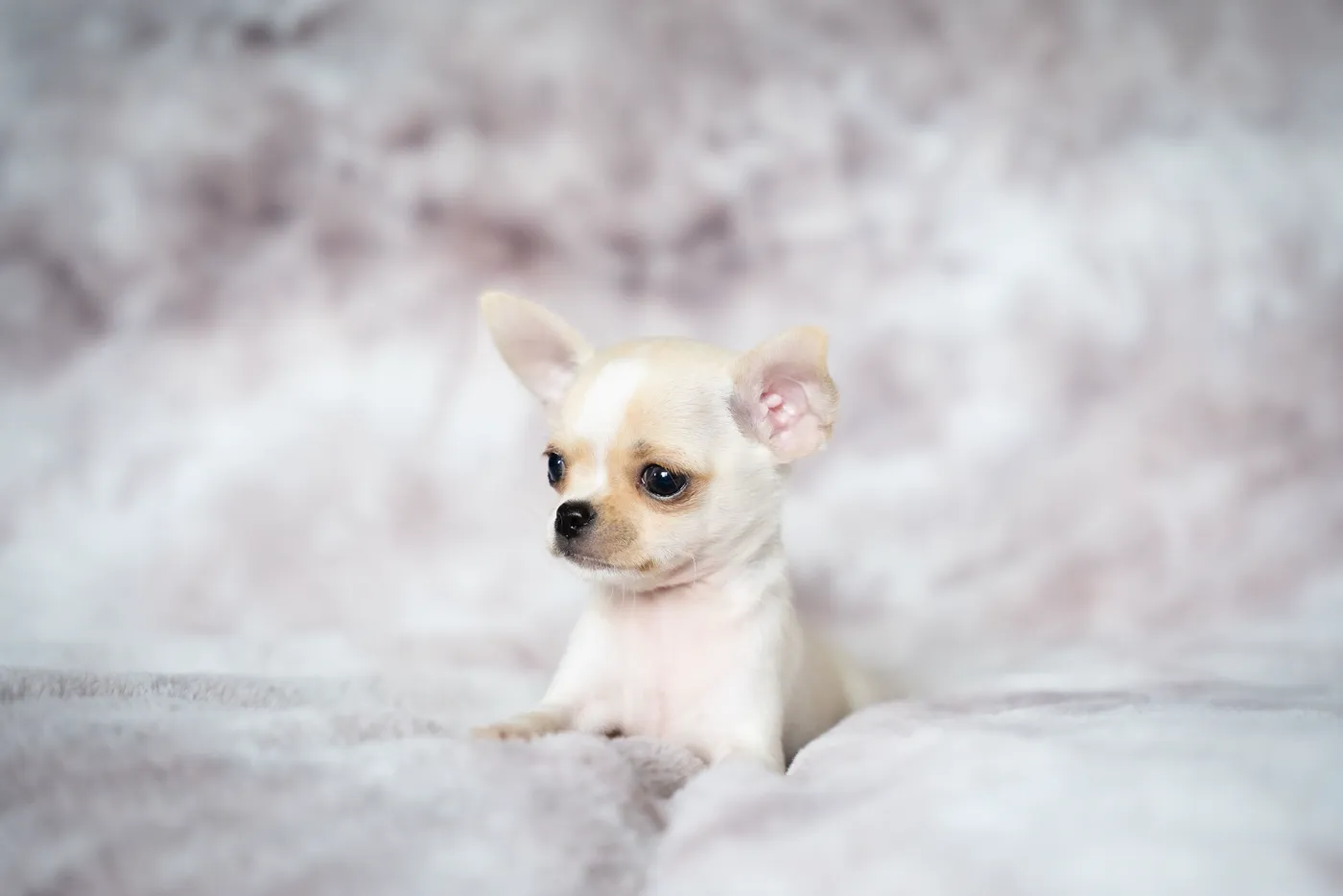
The Chihuahua is a one-person dog. It picks an owner, follows them and treats everyone else with reserve — and strangers with outright suspicion. This is not a spoiled character but the breed norm, and expecting Labrador-style sociability from a Chihuahua is a mistake.
The breed has a firm reputation for being nasty, and it is deserved exactly half the time. The problem is almost always upbringing: a 2 kg dog is forgiven what a large one would be corrected for instantly, and a year later you have a small tyrant growling at the whole family. A Chihuahua needs the same rules as a shepherd — they are simply easier to apply.
Socialisation is essential, especially with other dogs. Unaware of its own size, a Chihuahua will happily pick a fight with a large dog, and that ends badly. Outdoors in unfamiliar places keep it on a lead, and preferably off the shared dog run.
Care and health
In coat terms the Chihuahua is the least demanding of the small breeds: brushing once a week, and for the smooth variety a rubber mitt is enough. There is no clipping and no grooming appointment every two months as with a Poodle or a Yorkie — it is noticeably cheaper to keep.
The medical side, however, needs attention. The breed's three main problems are luxating patella, tracheal collapse, and tartar with early tooth loss. From that follow some simple rules: a harness rather than a collar, weight control, and professional dental cleaning once a year.
Chihuahua puppies are prone to hypoglycaemia — a sharp drop in blood sugar after a long gap between meals. Up to four months they are fed 4–5 times a day, and a puppy under three months should not be taken at all, however sweet it looks in the photos.
Living in an apartment
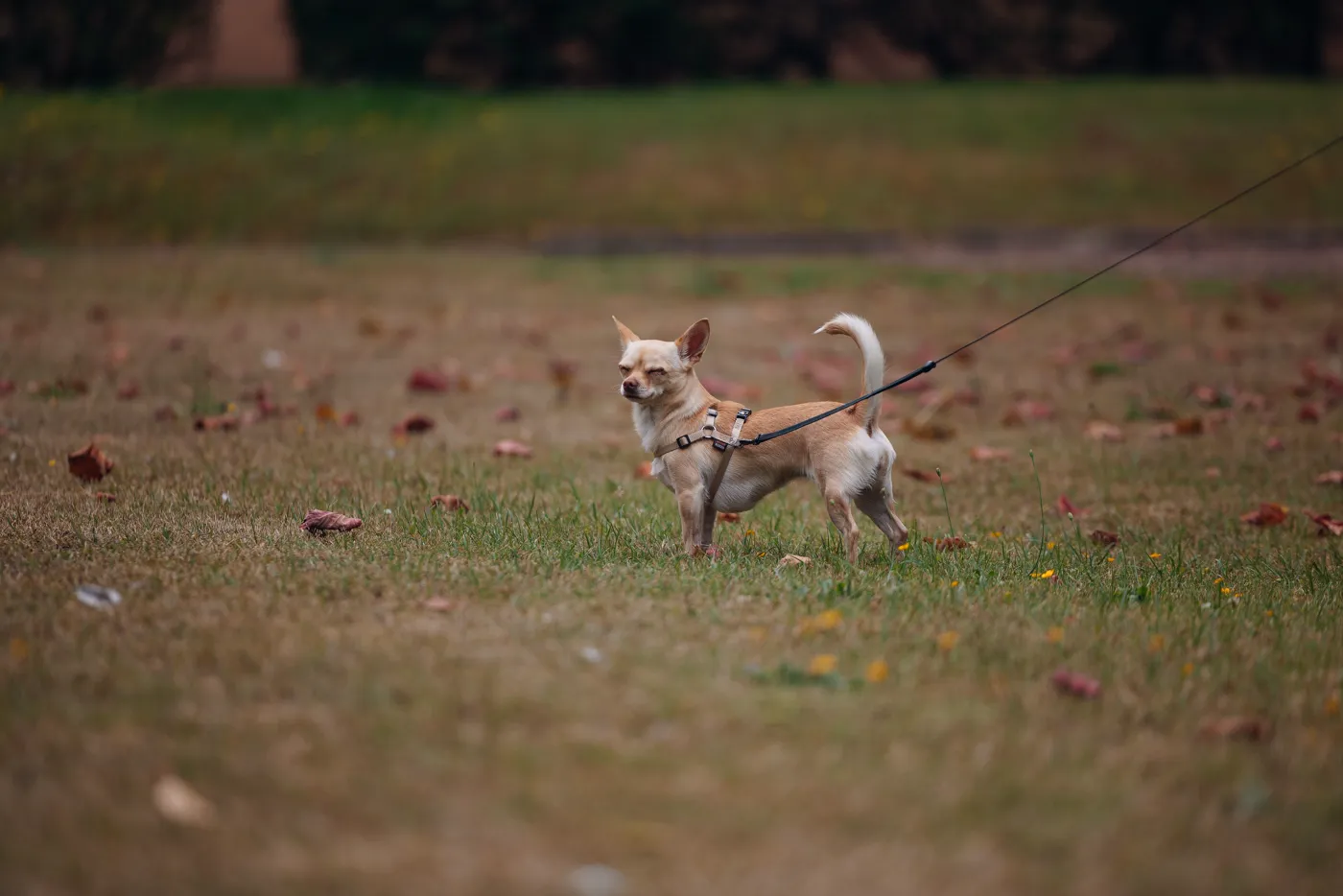
The Chihuahua is probably the most convenient flat dog there is: two kilos, minimal coat, short walks. Most owners also train it to a pad, which at this size is sensible.
Cold is the main limitation. The breed was developed in a hot climate, has almost no body fat and no undercoat, and is already cold at +5 °C. From October to March it goes out only in a coat, and in hard frost the walk is cut to a few minutes. A Moldovan summer, on the other hand, suits it perfectly.
Chihuahua price in Moldova
A Chihuahua puppy in Moldova costs between 2,500 and 12,000 MDL, with a median around 5,000. The upper end is puppies with FCI papers, rare colours and titled parents; the lower end is home matings without documents.
Upkeep, meanwhile, is among the cheapest of the small breeds: no grooming, and a 2 kg dog eats very little. The main costs are veterinary: dental cleaning and keeping an eye on the knees.