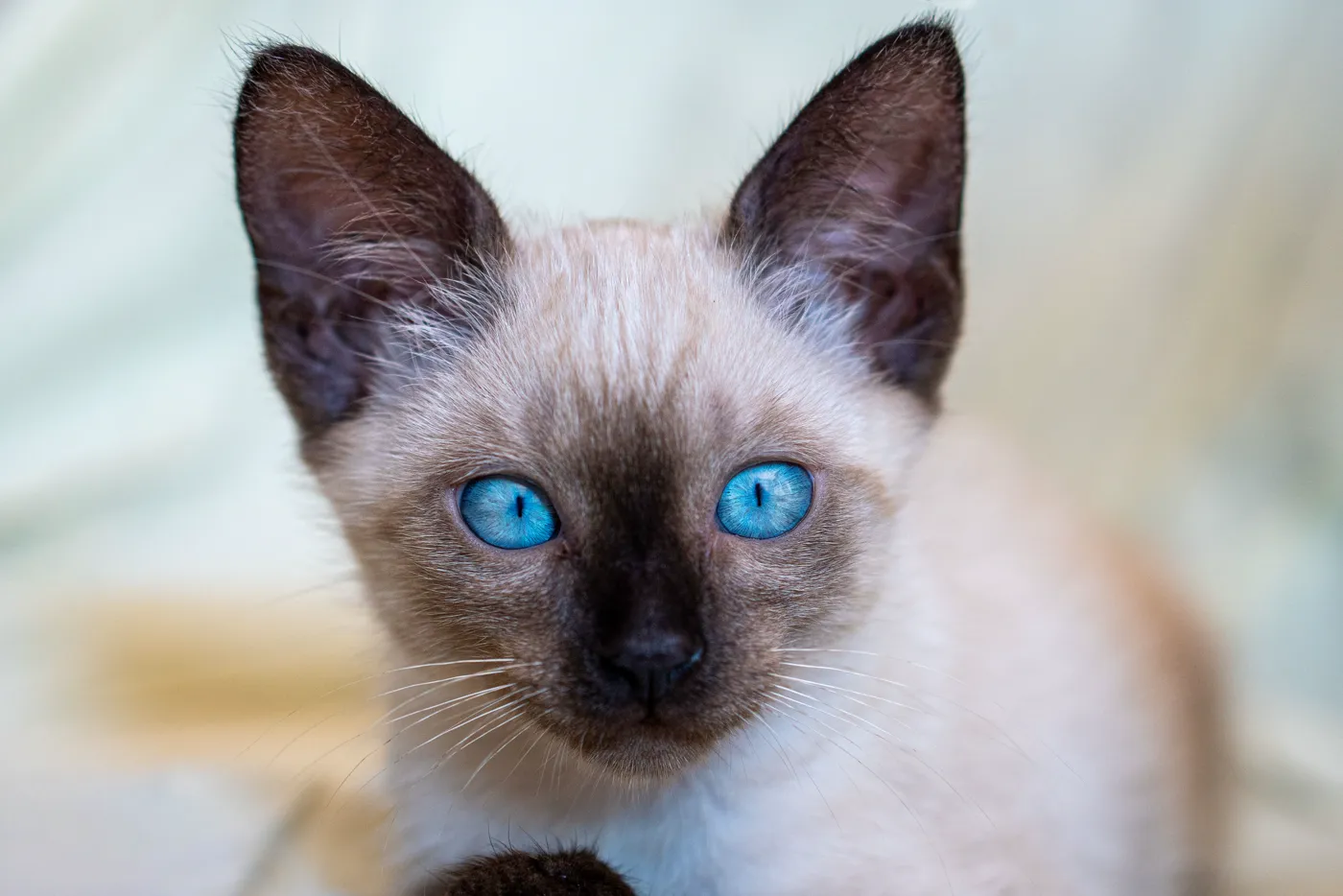
Siamese breed overview
The Siamese is one of the oldest known breeds: in Siam, today's Thailand, such cats were kept at temples and palaces, and they reached Europe at the end of the 19th century. The characteristic colourpoint pattern — a pale body with dark face, ears, paws and tail — comes from a temperature-dependent gene: pigment is only produced in the cooler parts of the body.
Because of that gene all Siamese kittens are born completely white; the pattern appears over the first weeks and keeps darkening until the age of two. An adult cat living in a warm flat is usually lighter than one kept somewhere cool.
Two types are distinguished: the traditional (Thai) type — rounder and sturdier — and the modern show type — elongated, with a wedge head and very large ears. In Moldova listings mostly feature the traditional type; the show type is largely imported from catteries in Romania and Ukraine.
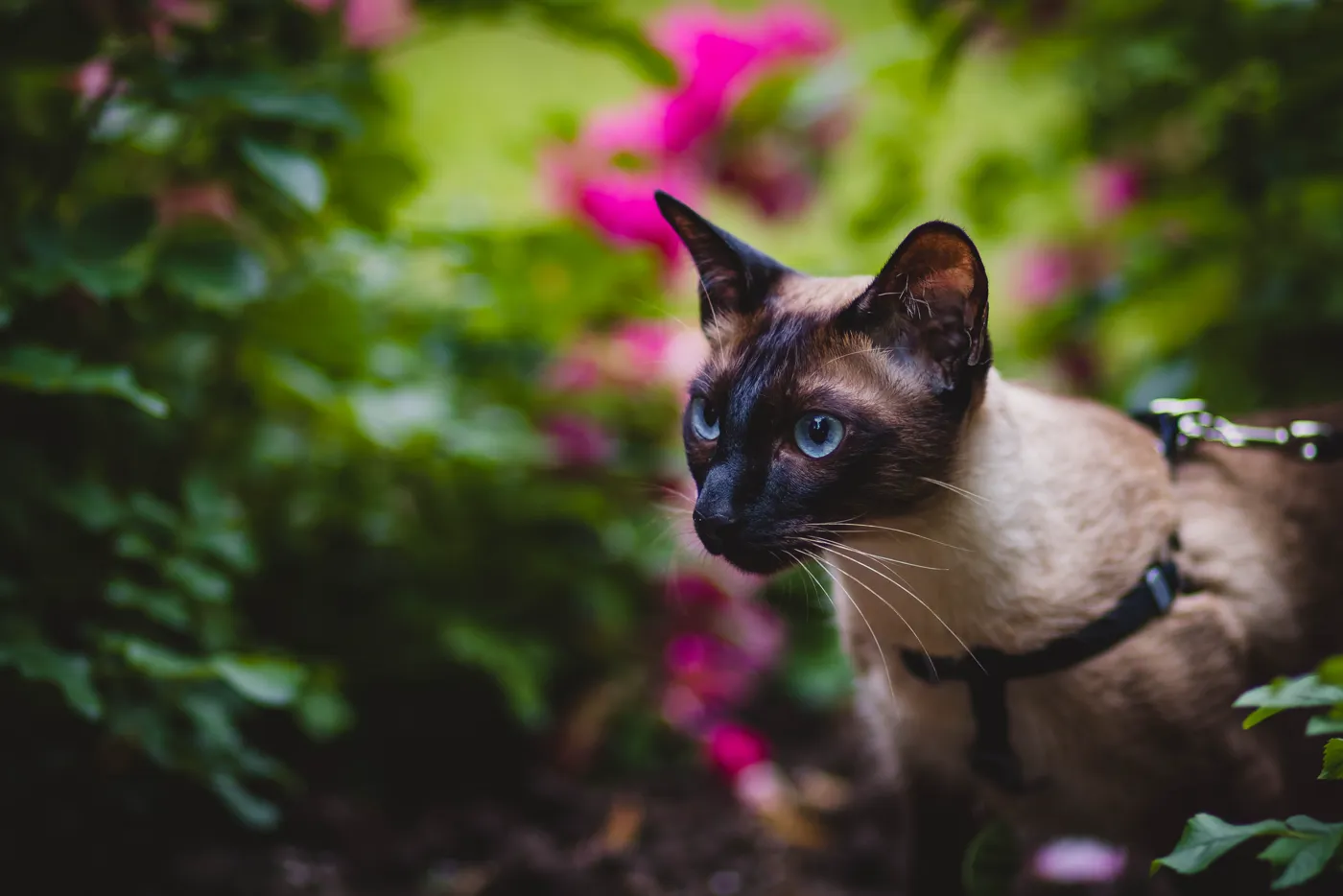
Temperament
The Siamese talks. That is not an exaggeration: the breed is known for a loud, low voice and the habit of commenting on everything that happens, from you leaving for work to an empty bowl. Anyone who wants a quiet cat should look elsewhere — it cannot be trained out, it is a feature of the breed rather than of upbringing.
The attachment to people is closer to a dog's. The cat follows you around, sleeps beside you, meets you at the door and demands a part in whatever you are doing. Left alone all day it genuinely suffers: howling, destroyed belongings and sometimes stress-related health problems. If nobody is home during the day, a Siamese is better taken as a pair from the start.
The breed is very active and clever: Siamese cats learn commands, fetch toys and open doors and cupboards. They need cat trees, toys and attention, otherwise they find their own entertainment — usually in the form of the curtains.
Care
In care terms the Siamese is one of the simplest breeds. The coat is short, there is no undercoat and shedding is moderate: a rubber mitt once a week is enough. The breed needs no clipping, no stripping and no regular bathing.
The lack of undercoat means the cat gets cold. Siamese cats seek out warm spots, sleep under the duvet and on the radiator — that is normal. In a cool flat they need a bed in a warm corner in winter, and draughts do them more harm than they do most cats.
Among hereditary problems the breed sees hepatic amyloidosis and progressive retinal atrophy. Responsible breeders test their breeding cats and hand over the kitten with a vet passport and age-appropriate vaccinations.
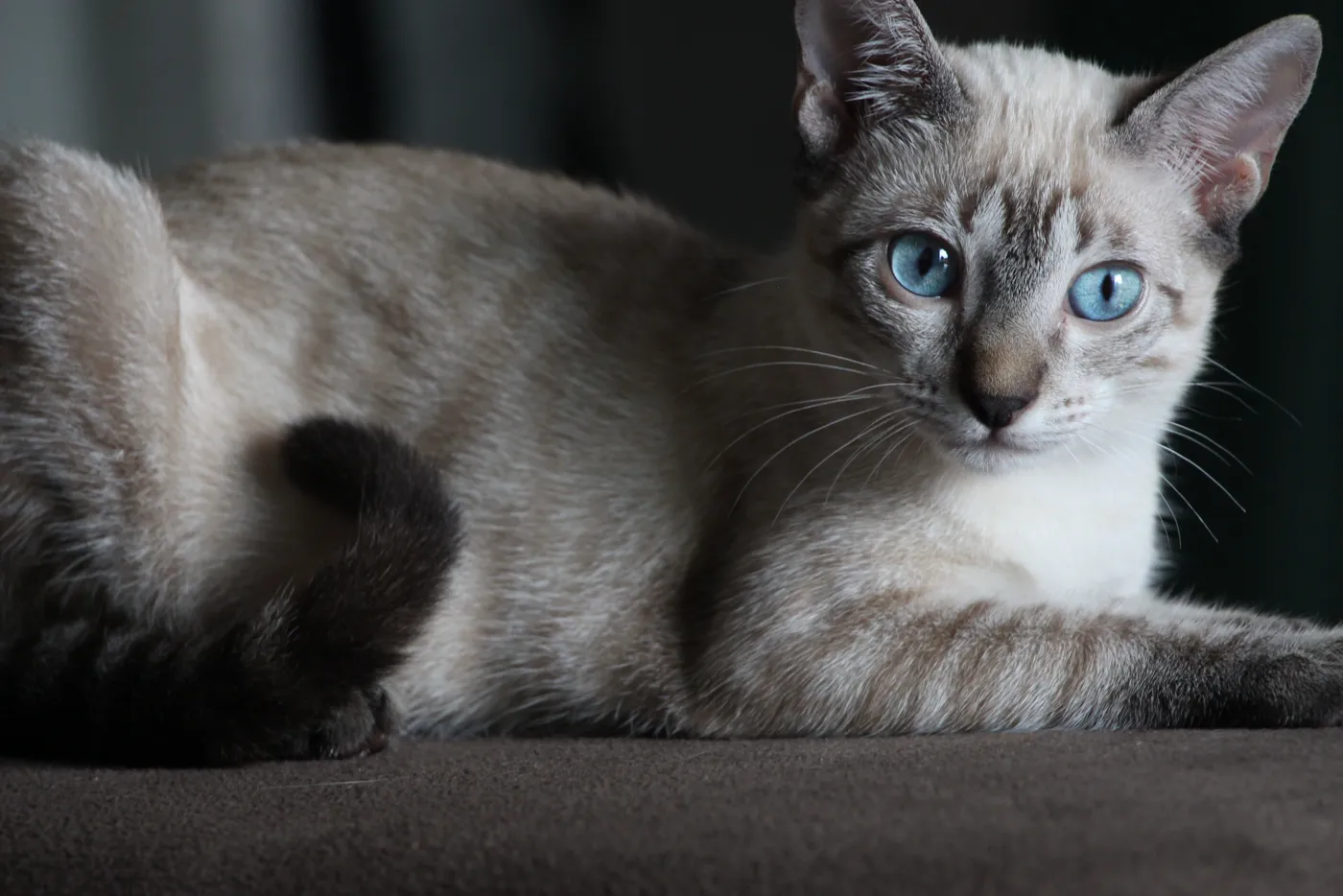
Living in an apartment
A flat suits the Siamese perfectly, on two conditions: vertical space and company. A cat tree with shelves up to the ceiling is not decoration for this breed but a necessity — Siamese cats climb and need height.
The second condition is not leaving the cat alone for long. It is the most social of the popular breeds and loneliness is its main stressor. If you are out at work all day, get either a second cat or a different breed.
Siamese kitten price in Moldova
A Siamese kitten in Moldova costs between 1,500 and 5,000 MDL — one of the most affordable pedigree cats in the country. Listings are few, around two or three per hundred cat adverts, but the price is lower than for British or Scottish cats.
A low price does not mean low quality, but papers are most often absent in this segment. If a pedigree and parent testing matter to you, look for a kitten from a cattery and expect the upper end of the range, or an import from Romania.